Voice-to-voice assistants and AI receptionists are creating a practical business opportunity for entrepreneurs who understand customers, distribution and service delivery. For web design agencies facing pressure from AI, they also offer a credible path forward.
Anthropic’s IPO has given the world another extraordinary AI wealth story. Reuters reported estimates that roughly 2,800 current and former employees could hold at least $1 million in vested equity at the valuation considered before the offering. Those estimates describe paper wealth, rather than cash already in everyone’s bank account, but the scale is remarkable. Reuters
For entrepreneurs watching from outside Silicon Valley, it raises an obvious question: where is the next accessible opportunity?
Building a frontier AI company requires exceptional talent, enormous computing resources and substantial capital. Most business owners will never compete at that level. They can, however, build valuable businesses around what those models make possible.
Voice-to-voice AI and AI receptionists are particularly promising because they address a familiar commercial problem: customers have questions, businesses cannot always respond, and potential revenue disappears in the gap.
A prospective hotel guest wants clarification before booking. A homeowner needs to know whether a contractor serves their area. Someone considering an accounting firm wants to understand its services before arranging a consultation.
These are ordinary conversations with real commercial value. Entrepreneurs who make them easier to handle have something concrete to sell.
The next substantial opportunity in AI may be found in thousands of these businesses, each with a specific customer experience to improve.
For years, businesses paid to get visitors onto their websites. They invested in design, advertising, search visibility and persuasive content. Yet the final step often remained surprisingly weak: a contact form, an unanswered telephone or a promise to respond during business hours.
Consider a prospective customer visiting three competing websites at 9 p.m.
All three look professional. All three claim excellent service. Only one lets the visitor ask a question aloud, receive a relevant answer, explain what they need and leave useful details for follow-up.
That business has created an opportunity to earn trust while the customer is still interested.
This is the commercial appeal of voice AI. Its value comes from helping a person move from uncertainty toward a decision.
The underlying technology has become more practical. OpenAI supports direct speech-to-speech conversations and browser connections through WebRTC. Its documentation explains that native audio interaction can reduce latency and preserve information about tone and inflection. xAI also offers a speech-to-speech API for building real-time voice applications. Developers now have established infrastructure on which to build useful services. OpenAI, xAI
That does not mean every voice assistant responds instantly or understands every hesitation correctly. Network conditions, turn detection, knowledge retrieval and external systems still affect the experience.
It does mean that entrepreneurs can focus more of their effort on the business problem. The questions become practical: what should the assistant know, which enquiries should it handle, what information should it collect, and when should a person take over?
Those decisions determine whether a convincing demonstration becomes a service customers will keep paying for.
Browser-based voice also changes where these conversations can begin.
A visitor no longer necessarily needs to dial a number or move into a separate telephone system. A website can offer a direct audio conversation over the internet. For that interaction, the traditional telephone network is unnecessary.
Telephone reception still matters for people calling an existing business number. Browser voice creates an additional front door, located exactly where customers are researching the business.
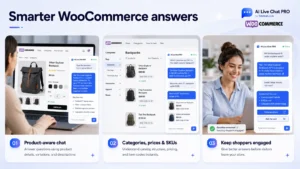
Sitetrail’s AI Live Chat Pro illustrates this approach. Its Instant Call feature brings live voice conversations to WordPress and WooCommerce alongside text chat. Both use shared business knowledge, with contact capture and conversation history supporting follow-up. Businesses can customize the assistant’s branding, choose animated avatar GIFs or upload their own. Instant Call currently uses OpenAI; selecting Grok for text does not change the voice provider. AI Live Chat Pro
The avatar helps establish a recognizable presence. The business knowledge makes that presence useful.
A polished assistant that cannot explain the company’s services will quickly disappoint visitors. One that accurately answers a buying question, captures a worthwhile enquiry and prepares the team to respond can contribute to a measurable business outcome.
That is where the economics become interesting.
Suppose a business compares a $3,000 monthly staffing expense with a $150 monthly AI service. The difference between those two figures is 95%. But presenting that arithmetic as a guaranteed 95% reduction in reception costs would confuse two different services.
A human receptionist may handle sensitive conversations, coordinate colleagues, welcome visitors and resolve exceptions that an automated assistant cannot manage. An AI service also has usage, setup, monitoring and support costs.
A stronger commercial case starts with the work that can actually be improved.
How much time goes into repeating the same service information? How many worthwhile enquiries arrive after hours? How often do employees interrupt other work to answer basic questions? How many prospects leave because they cannot get a simple clarification?
An assistant can create value by reducing that friction while allowing staff to concentrate on conversations requiring judgment.
It can also create value through additional business. In a hypothetical example, a service costing $150 a month would cover that expense if it helped generate one additional job contributing $300 after direct delivery costs. The actual result must be measured, but the logic is easy for a business owner to understand.
Entrepreneurs should sell against that kind of outcome.
Claims about replacing whole departments may attract attention. A clear account of enquiries captured, staff time saved and customers helped is more likely to survive a renewal conversation.
The best initial markets are businesses where customers repeatedly ask similar questions before taking a valuable next step.
For hotels, this can include parking, arrival arrangements, room policies and reservation enquiries. A visitor who gets the information they need may be more comfortable booking directly.
For accountants and other professional service firms, an assistant can explain service categories, gather preliminary requirements and prepare a consultation request. Booking directly into a calendar requires the appropriate integration; collecting a request is a useful starting point in its own right.
For dental and healthcare practices, a sensible initial scope is administrative: opening hours, location, appointment requests and approved information about services. Clinical triage is a separate, more demanding undertaking and should not be casually bundled into a generic receptionist offer.
For home service businesses, the assistant can clarify service areas, explain available work and collect the details needed for a useful callback.
Each example gives the entrepreneur a focused proposition. A business owner can understand what will improve and how to judge whether it has.
This is why distribution matters so much.
A general AI model does not automatically arrive with a trusted relationship with the owner of a local hotel, dental practice or roofing company. Someone still has to explain the opportunity, configure the service, test it, train the client’s team and remain accountable after launch.
There is room for entrepreneurs who specialize in that work.
A provider focused on one industry can build better onboarding questions, anticipate common customer concerns and develop a repeatable implementation process. Experience from one deployment can improve the next without assuming that every business has identical requirements.
That repeatability is one route toward healthier margins. The provider becomes faster and more competent while the customer continues receiving a service adapted to their business.
The reseller opportunity follows naturally.
Sitetrail lists a Growth plan at $49 per month for up to 10 websites and an Agency plan at $199 per month for up to 1,000 websites. AI provider usage is billed separately. Agencies can configure client sites individually; particular resale arrangements and custom development are subject to agreement with Sitetrail. Plans and agency details
Those licence economics can support a managed service business, but a licence alone is not a business model.
The commercial offer should include the work that makes the assistant dependable: onboarding, knowledge preparation, branding, testing, lead delivery, monitoring and ongoing improvements.
Pricing should reflect that work and the customer’s needs. A simple website assistant and a service connected to several operational systems should not be treated as identical products.
For illustration, 20 clients paying $150 a month would produce $3,000 in monthly recurring revenue. Subtracting a $199 portfolio licence leaves $2,801 before AI usage, delivery labour, support, acquisition costs, hosting and other expenses. That figure is not profit. It is a starting point for assessing whether the service can be delivered sustainably.
Operators who understand those costs can build a serious recurring business. Those who promise unlimited service without understanding usage and support requirements may discover that revenue and margin are very different things.
For web design agencies, this shift deserves particular attention.
AI has made the production of basic pages, layouts and copy easier. That can make it harder to defend fees based mainly on the time required to produce those assets.
Yet clients still need help deciding what their websites should accomplish and making the necessary systems work together.
An agency that already manages a client’s WordPress site has useful advantages. It knows the website, understands the services, has a working relationship with the owner and often handles the surrounding marketing tools.
Those capabilities translate directly into deploying and maintaining a website assistant.
The agency can expand its role from delivering pages to improving the conversations those pages generate. Design remains relevant: visitors need to understand the assistant, find it at the right moment and move comfortably between speaking, reading and completing an action.
Existing agency skills therefore retain value. They become part of a broader service tied more closely to the client’s commercial results.
A practical starting point is a small pilot across existing clients with repetitive enquiries or weak after-hours coverage. Establish the current process first. Then introduce the assistant with a clearly defined scope and measure what changes.
Review the questions people ask. Check whether answers are accurate. Confirm that enquiries reach the right person. Find out whether the client’s team considers the collected information useful.
That creates the basis for an ongoing service and a credible case study.
It also offers a more constructive response to the fear that AI is taking all the work. Some production tasks are becoming easier to automate. At the same time, businesses need help introducing automation into the places where it must work reliably.
Agencies can earn that work by becoming competent at implementation and accountable for the outcome.
Looking ahead, voice is likely to become a more common option for everyday business interactions. Screens will continue to matter for comparing products, reviewing prices, checking details and completing transactions. The strongest experiences will let customers choose the mode that suits the moment.
A person might begin by speaking, review information visually and finish in text. The opportunity lies in making that sequence feel coherent.
There is no need to predict the disappearance of screens by 2028 to see the commercial potential. Businesses already have unanswered questions, delayed responses and customers who would appreciate an easier way to engage.
Anthropic’s IPO demonstrates how much wealth the model-building layer can create. Entrepreneurs now have an opportunity to build businesses around putting that technology to work.
The first step is concrete: choose an industry, identify a conversation that regularly breaks down, deploy a focused solution and measure whether it helps.
For those ready to explore the model, try Sitetrail’s AI Live Chat Pro or watch the voice-to-voice demonstration.
The next valuable AI business could begin with a local company’s next unanswered enquiry.