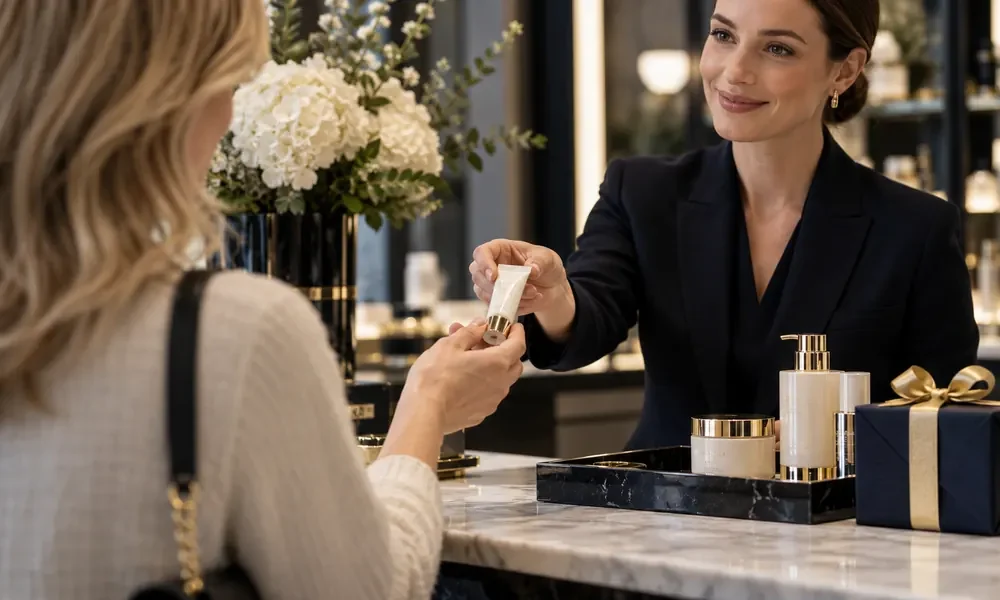
Sephora's Beauty Insider programme reached 45 million North American members in 2025. Much of its appeal comes from gifts, access and experiences, not price cuts.
Many loyalty programmes are discount schemes with a membership card. Customers learn to wait for the offer, and margins pay the price.
Sephora’s Beauty Insider programme is a useful contrast. It still uses discounts, but it has built much of its value on things that are not price cuts.
The business behind the programme
Sephora is owned by the French luxury group LVMH. In its 2025 annual results, published on 27 January 2026, LVMH said Sephora continued to grow both revenue and profit and gained market share in many countries.
LVMH’s Selective Retailing group, which includes Sephora, reported 4% organic revenue growth in 2025 and a 28% rise in profit from recurring operations. Sephora opened around a hundred stores during the year.
LVMH does not report Sephora’s results separately, so the group figures include other retailers such as DFS.
How the programme is built
Beauty Insider launched in 2007 and is free to join. It has three tiers: Insider, VIB and Rouge.
According to Sephora’s January 2026 announcement, the programme reached a record 45 million members in North America in 2025.
In a 2023 interview with Retail Dive, Sephora’s head of loyalty, Emeline Berlind, declined to give an exact figure but said a majority of Sephora’s US sales came from members.
Value that is not a discount
The most interesting design choice is how much of the programme’s value sits outside price.
The birthday gift. Berlind told Retail Dive that in every round of consumer research, the birthday gift was the number one benefit. Members choose from a range of products from partner brands, rather than receiving a standard percentage off.
Samples and rewards. Members can exchange points for samples and products through the Rewards Bazaar. Sephora’s 2020 programme update added experiences such as meetings with brand founders.
Access. Higher-tier members get earlier access to some launches, and all members got free standard shipping from 2020, with thresholds varying by tier.
Community. Sephora described its Beauty Insider Community as a members-only platform where people share looks and get recommendations.
Berlind summed up the approach: “We really think of value broadly and it’s more than just discount.”
Where discounts still fit
Sephora has not abandoned price. Its 2020 update introduced Beauty Insider Cash, which lets members exchange 500 points for $10 off.
Retail Dive also reported tiered seasonal sale discounts in 2023, of 10% for Insiders, 15% for VIBs and 20% for Rouge members.
The difference is that discounts are one part of a broader offer, often tied to events, rather than the main reason to belong.
Sitetrail NewsPass · SEO, PR & GEO
Build your search visibility, media presence and AI discoverability
Explore NewsPass for your SEO, PR and generative engine optimization strategy. Use the calculator to compare campaign costs and find a plan that fits.
Basic
$199/moSilver
$399/moGold
$599/moSee how NewsPass works
Why the gift works
The following is our analysis.
A birthday gift from partner brands has several advantages over a discount.
It introduces customers to products they may later buy at full price. Partner brands have a reason to take part, because it puts their products in front of engaged buyers.
It feels personal, which a standard percentage off does not. And it happens once a year, so it does not train customers to wait for the next offer.
Managing the cost
Generous benefits attract abuse and cost money. Sephora has adjusted the rules.
Retail Dive reported that Sephora limited the number of gifts sent to one physical address and introduced a $25 minimum order to redeem birthday gifts online. The January 2026 announcement confirms the online minimum, with in-store redemption still free.
Berlind described frequent changes as “core to how we are keeping a vibrant program going.”
The partnership channel
Sephora has also extended the programme beyond its own stores. Its shop-in-shops at the US department store Kohl’s offer key Beauty Insider benefits, including birthday gift redemption.
Berlind told Retail Dive that new members had joined through Kohl’s, and former members had reactivated their accounts.
Lessons for any business
Build value that is not price. Access, recognition, samples, service or expertise can matter as much as a discount, and often cost less.
Ask customers what they value most. Sephora’s research pointed to the birthday gift. Your customers may point to something else.
Use partners. Supplier-funded rewards can add value without adding the full cost.
Expect to adjust. A loyalty programme is a living offer, and some benefits will need limits.
What B2B and services firms can borrow
Professional services and B2B suppliers rarely run points schemes, but the principle travels.
Priority support, early access to new services, invitation-only briefings, training credits and named account contacts are all forms of non-discount value. They reward loyalty without teaching clients to negotiate on price every renewal.
What to measure
If you adopt this approach, measure it differently from a discount scheme.
Track the share of revenue from members, repeat purchase rates by tier, and how much of the programme’s cost goes on price cuts versus other benefits. Watch whether sales cluster around discount events. If they do, customers may be learning to wait.
The takeaway
Sephora shows that loyalty can rest on more than price. The discounts are still there, but much of the programme’s appeal comes from gifts, access and experiences that customers value and that do not erode margin in the same way.
Key takeaways
- Beauty Insider, launched in 2007, reached a record 45 million North American members in 2025; Sephora says a majority of US sales come from members.
- The birthday gift, samples, access and community provide value beyond price, while discounts remain one part of the offer.
- Sephora adjusts benefits frequently and adds limits to manage cost and abuse.
Put it into practice
List every benefit your customers or clients get for staying with you, mark which ones are discounts, and name one non-price benefit you could add or promote more clearly.
A question for your next leadership meeting
If we removed all discounts tomorrow, what reason would our best customers still have to stay?